THE CAPSULE / 05 A FWAHBL Game entry · August 2026
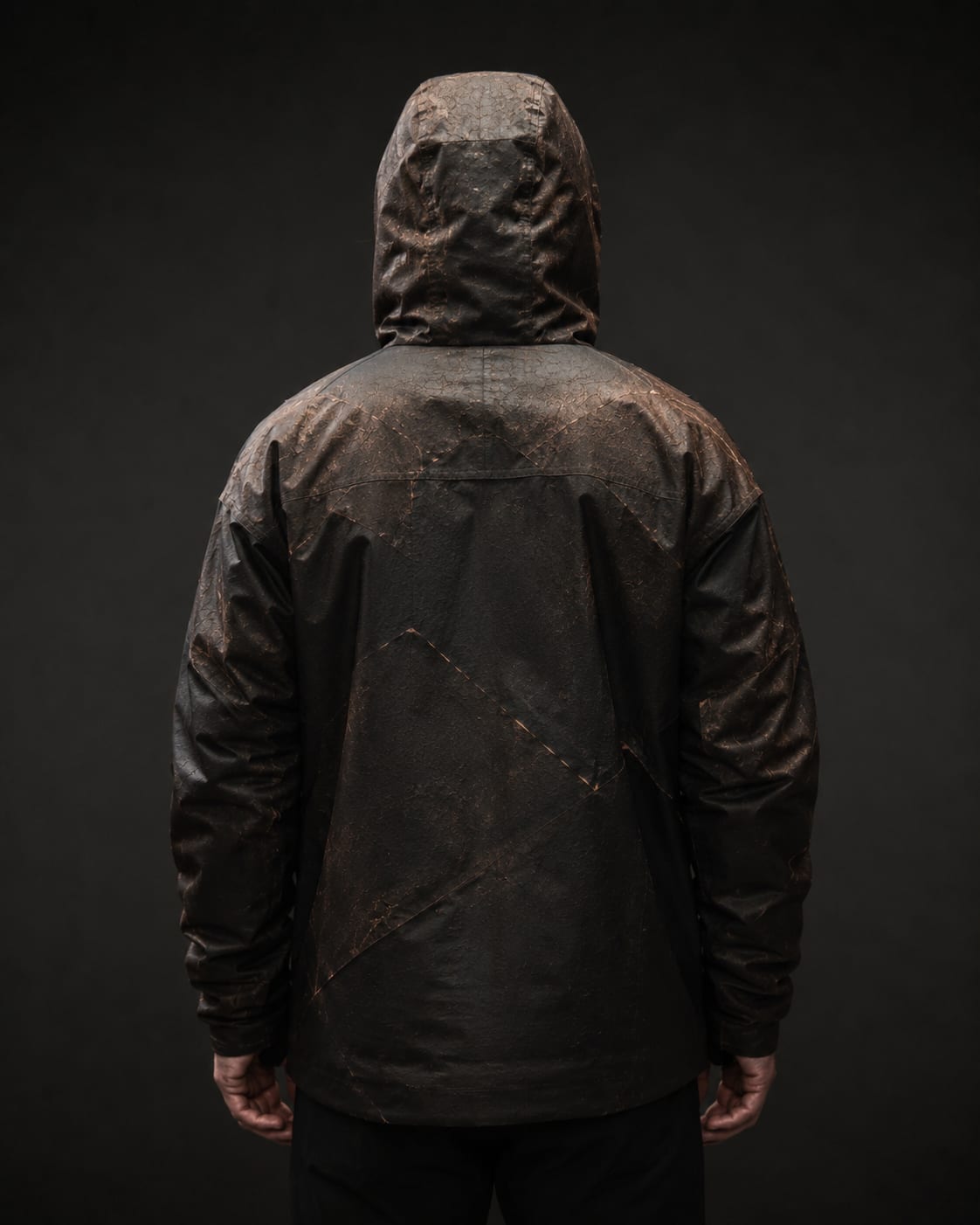
A hooded figure from behind, wearing a dark jacket veined with copper scars

For Vollebak · From Chris Campbell

When all hell breaks loose, these are my 5 people.And the gear they would create.

Everyone on my team has been through an apocalypse of their own. Four of them got out alive. The fifth jumped out of a Boeing 727 with a bag of cash and was never seen again. All five left instructions.

What follows is the kit they'd build: a capsule collection for the end of the world, designed by the people who beta tested it.
Teammate 01 Survived: 5,300 years in the ice Role: Quartermaster

Ötzi

Ötzi is the man hikers found in an Alpine glacier in 1991, five thousand years dead, his gear still intact. Copper smelter, flint knapper, walking pharmacy. He carried medicinal fungi in his pouch and wore tattoos mapped to acupuncture points 3,000 years before China wrote the manual.

I'm taking him for his skills, knowledge, and the wardrobe. It's the oldest complete outfit ever recovered. It outlasted Rome and every empire since because nothing on it was disposable. Everything was patched, maintained, renewed. When the supply chain dies, I want the one man who never had one.

Why he's on the team Every team needs a quartermaster. His kit has survived 5,300 winters. Mine rips on a fence.
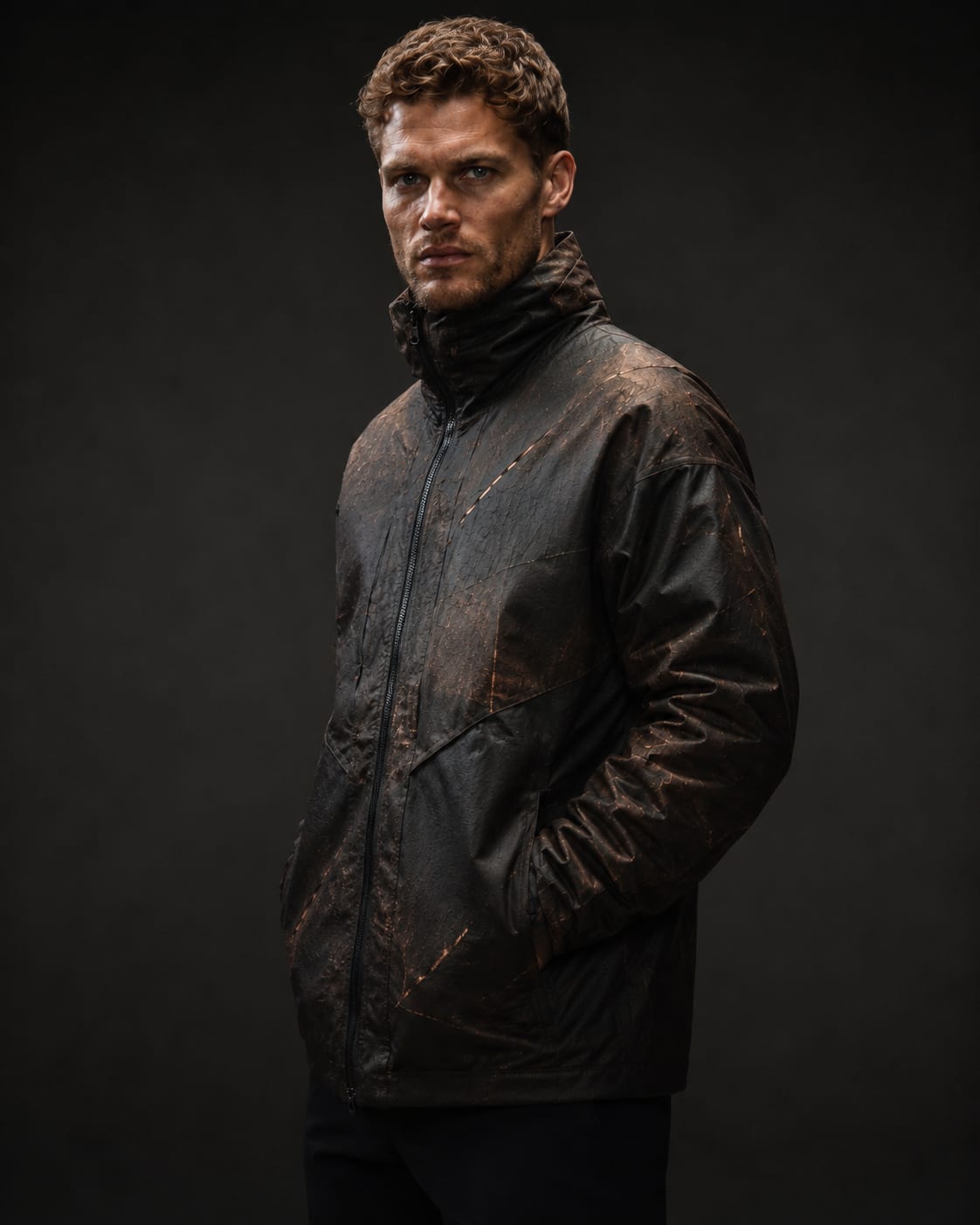
The Ötzi Jacket worn, dark shell veined with copper healing scars
He builds

The Ötzi Jacket

The first jacket that heals like skin. Cars heal. Phones heal. Bridges heal. A jacket rips once and calls it a life. He would not have tolerated that.

  • ShellMicroencapsulated healing agents (dicyclopentadiene) in the coating. A cut ruptures the capsules, the agent flows into the wound and seals it shut.
  • MembraneA polyborosiloxane mid layer that reseals punctures at room temperature. No heat gun, no patch kit, no tailor.
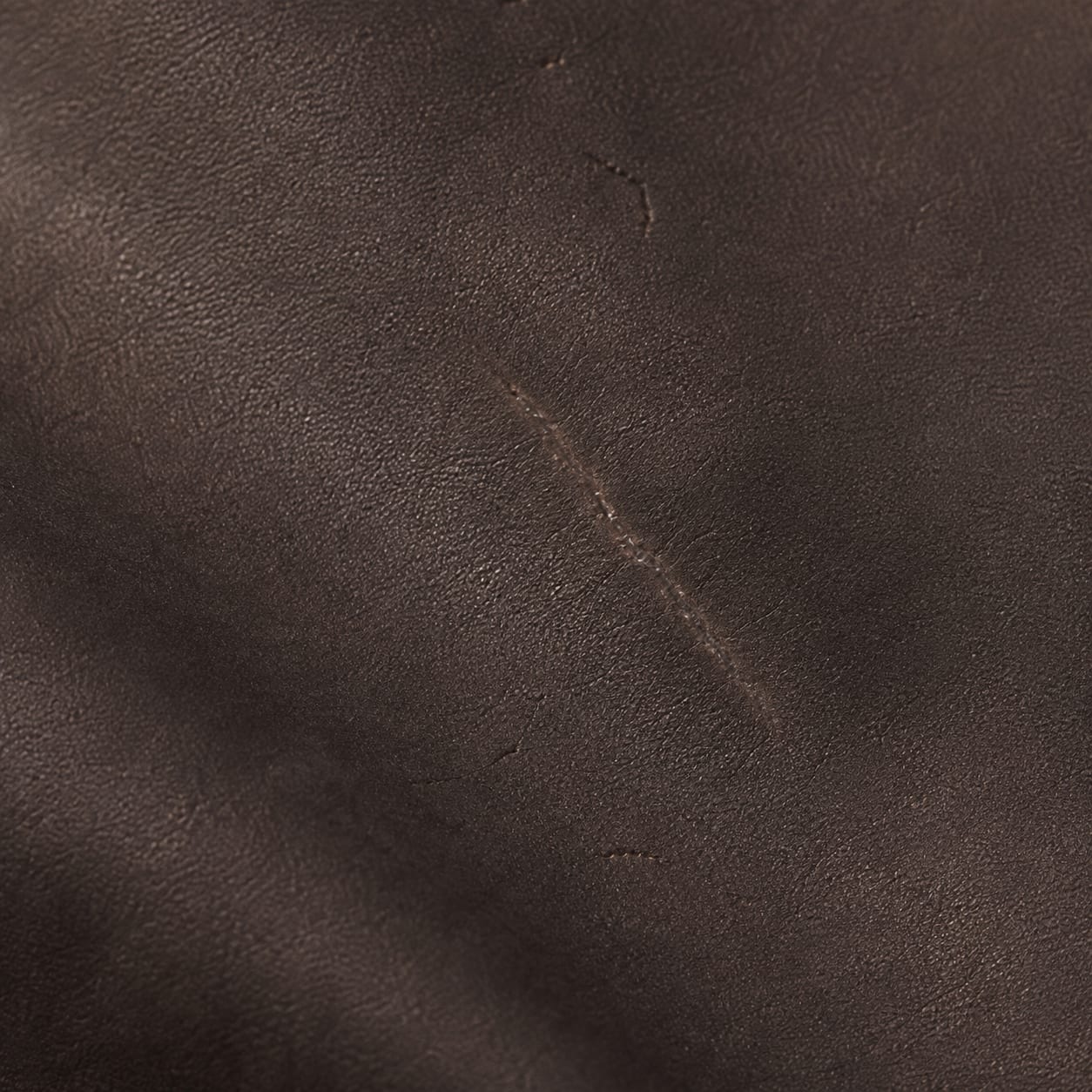
  • ScarsHealed cuts leave a faint raised line, on purpose. A jacket that has been through things should look like it.
  • DoctrineElbows, cuffs and hem built as replaceable panels with honest stitching. A repair kit ships in the pocket: matched thread, spare panel, needle.

CARE LABEL: THIS JACKET WILL OUTLIVE YOU. ACT ACCORDINGLY.

Back view of the Ötzi Jacket, hood up, copper scar lines across the shell
The shell. Every line is a healed wound.
Macro of the fabric with one sealed cut, a faint raised scar line
The proof shot. One cut, sealed shut, scar kept.
Teammate 02 Survived: Hacksaw Ridge, Okinawa, 1945 Role: Medic

Desmond Doss

A conscientious objector who climbed a 400 foot escarpment into one of the worst battles of the Pacific carrying no weapon at all, then lowered roughly 75 wounded men down the cliff face one at a time, under fire, praying the same sentence between each one: Lord, help me get one more. Medal of Honor.

Why he's on the team The only man on that ridge whose entire loadout was keeping other people alive. That is the teammate. That is also the jacket.
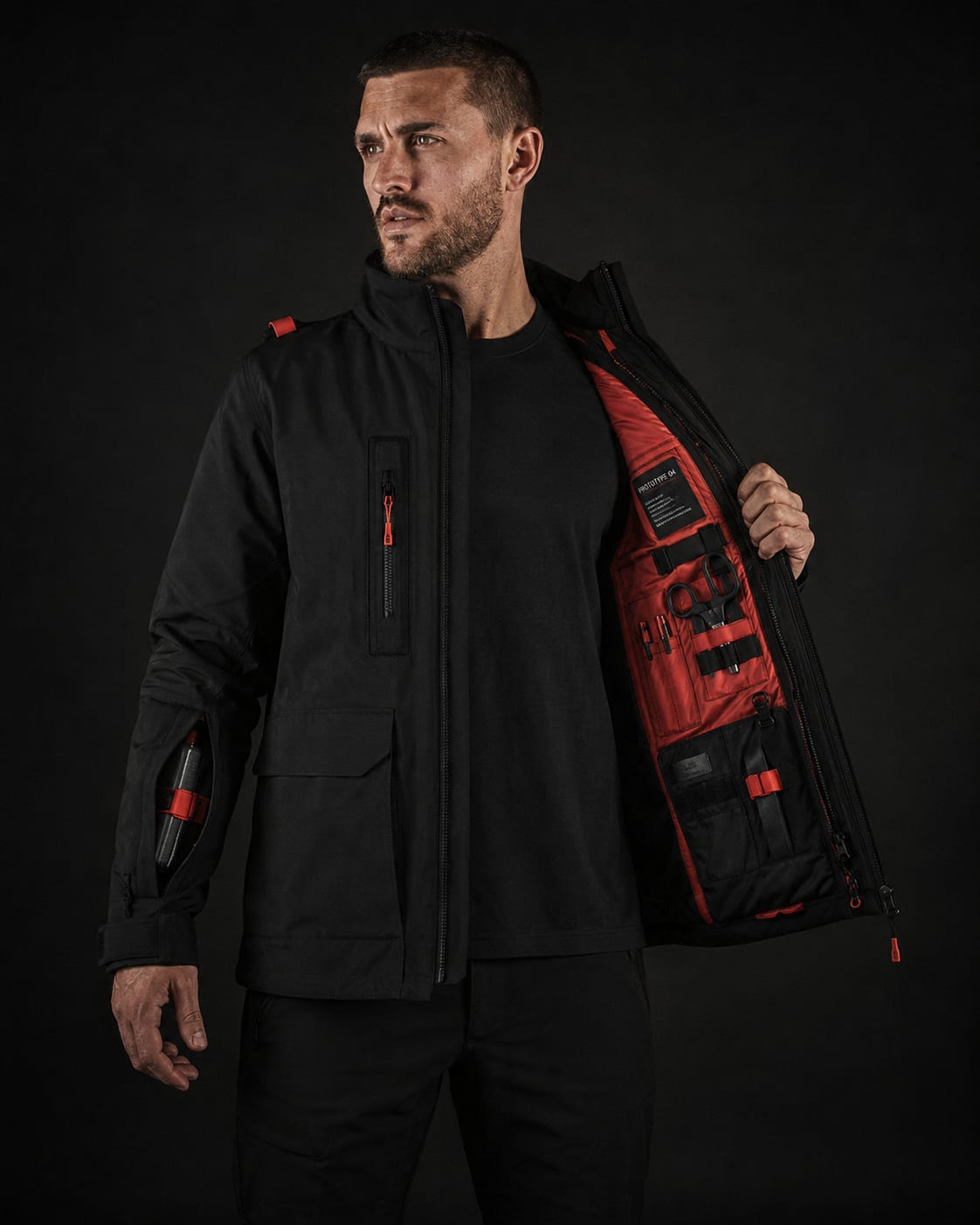
The Trauma Jacket worn open, revealing a surgical red interior with medical modules
He builds

The Trauma Jacket

Dresses like a minimalist. Deploys like a paramedic. Catastrophic bleeding kills in three to five minutes and the ambulance is seven away. This jacket lives inside that gap.

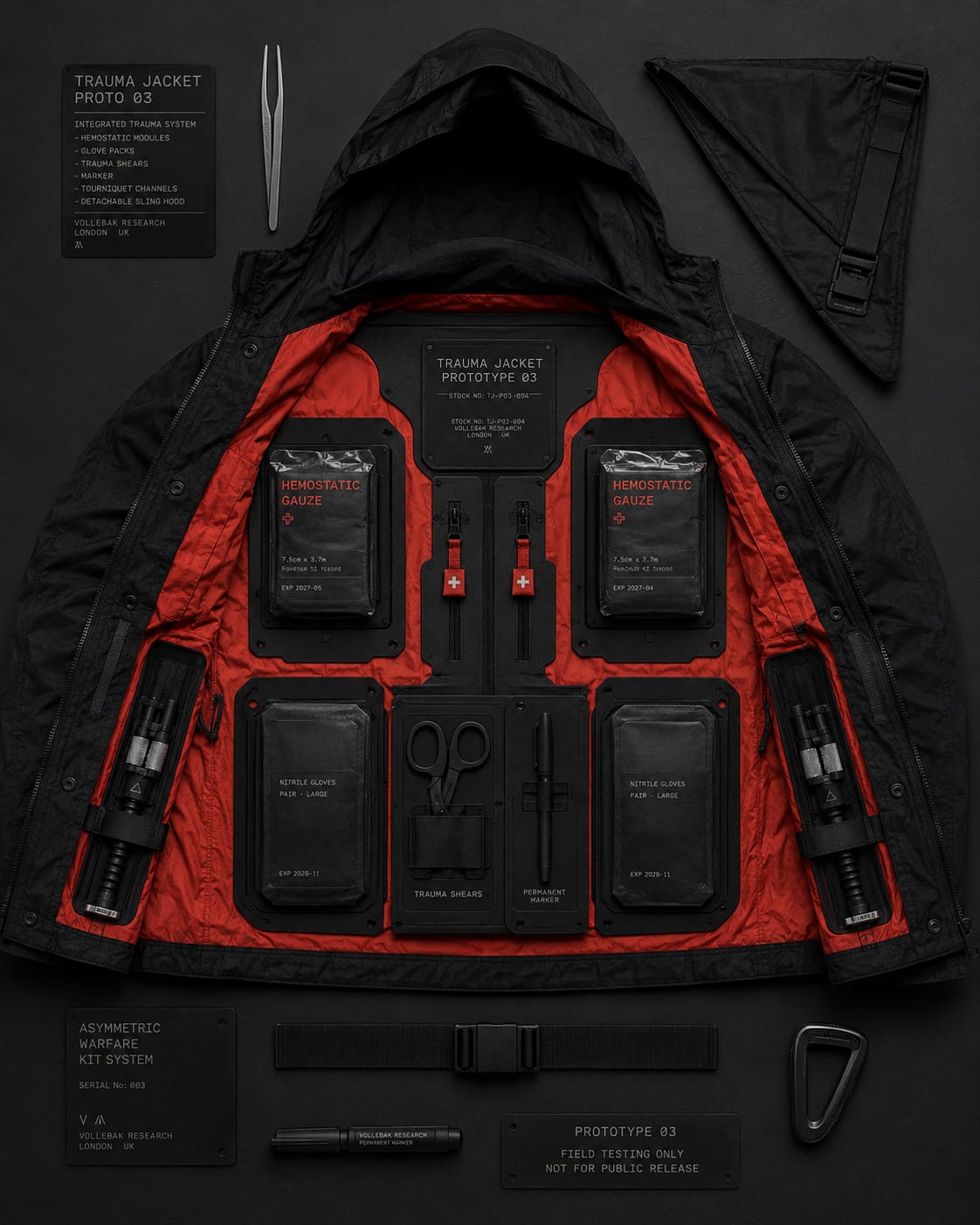
  • SleevesA tourniquet sewn into each arm. Grab the red tab, pull, crank the windlass, lock. Under 25 seconds, one handed, instructions printed on the strap.
  • ChestTwo flat docks holding 24 feet of hemostatic gauze, each pack the thickness of a phone. Tear, pack the wound, press for three minutes.
  • HoodCut as a 40 inch triangle, the exact dimension of a field bandage. Zip off, unfold: sling, pressure tie, splint wrap.
  • ModesClosed: monochrome calm. Open: surgical red. The color story tells you which mode you are in.
The Trauma Jacket laid flat and open: symmetrical medical module docks on a red interior
Open: a trauma bay in miniature. Closed: you would never know.
Teammate 03 Survived: the only unsolved skyjacking in American history, 1971 Role: Operational security

D.B. Cooper

November 1971. A man calling himself Dan Cooper hijacks a Boeing 727, collects $200,000, and jumps into a storm. The FBI works the case for 45 years and gives up.

I chose him because he pulled off the grandest heist ever... and left without a trace. Almost. One $1.49 clip-on tie on seat 18-E. One hundred thousand particles. Fifty five years of manhunt, running on lint.

You shed like that too, everywhere you go. Yours just doesn't end up in an FBI lab. It ends up in the sea: hundreds of thousands of microplastic fibers with every wash, one of the largest sources of ocean microplastic. The world needs clothes that don't shed.

Why he's on the team Head of operational security. When civilization reboots, the most valuable skill on Earth is leaving no record that you were ever there.
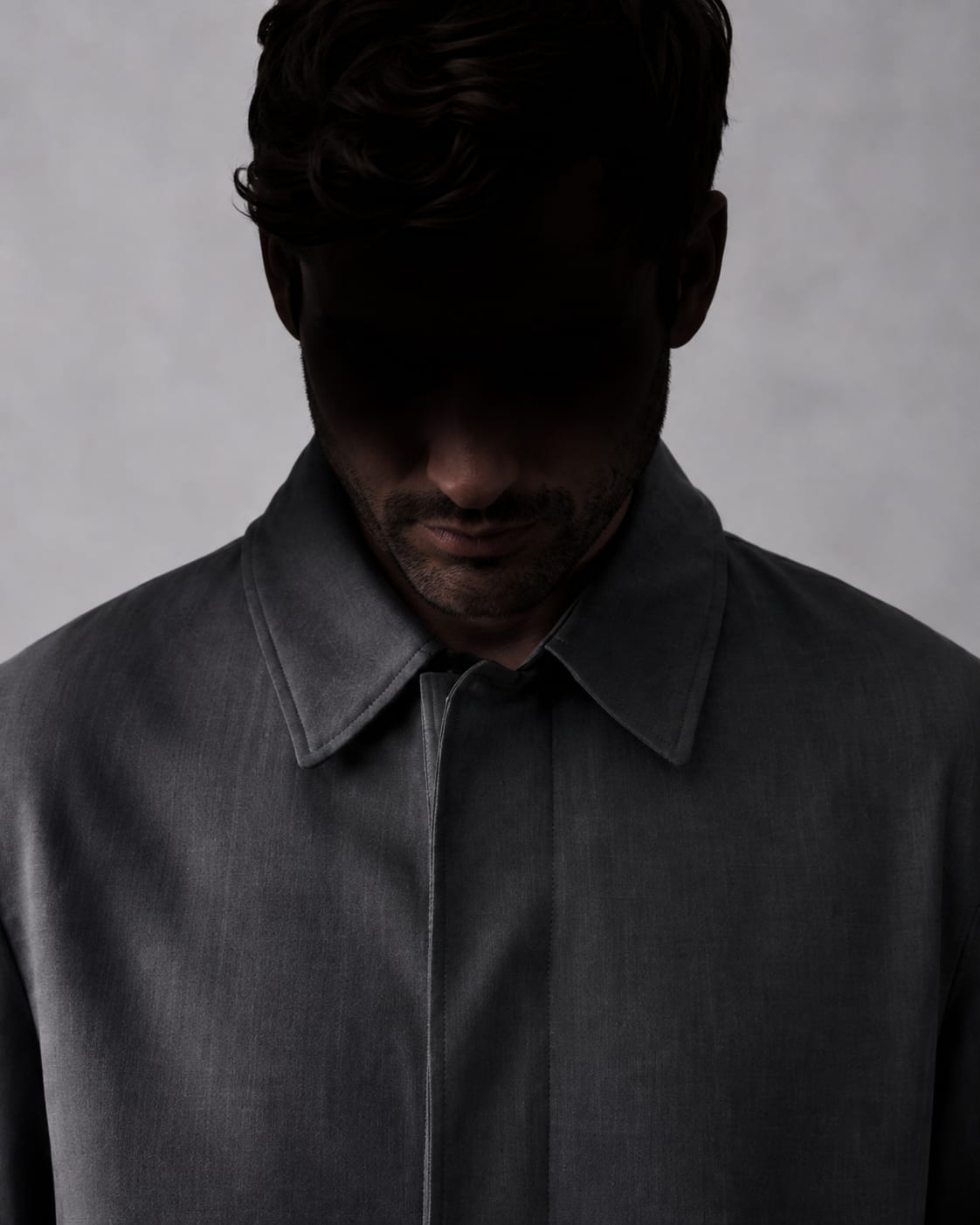
The No Trace Jacket close up, collar flat, the wearer's face lost in shadow
He builds

The No Trace Jacket

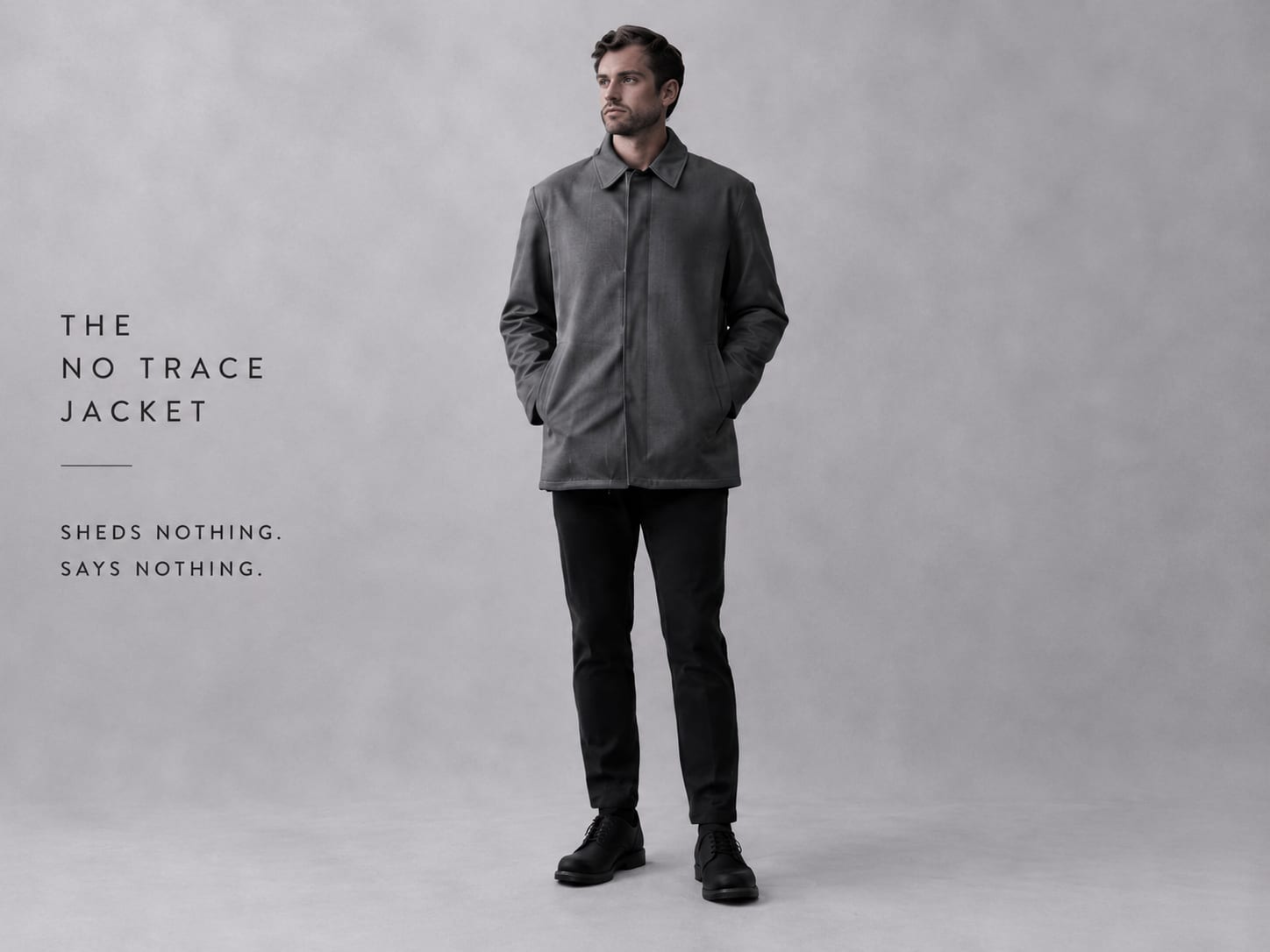
The off switch. Zero thread, zero shed, zero witnesses. Sheds nothing. Says nothing.

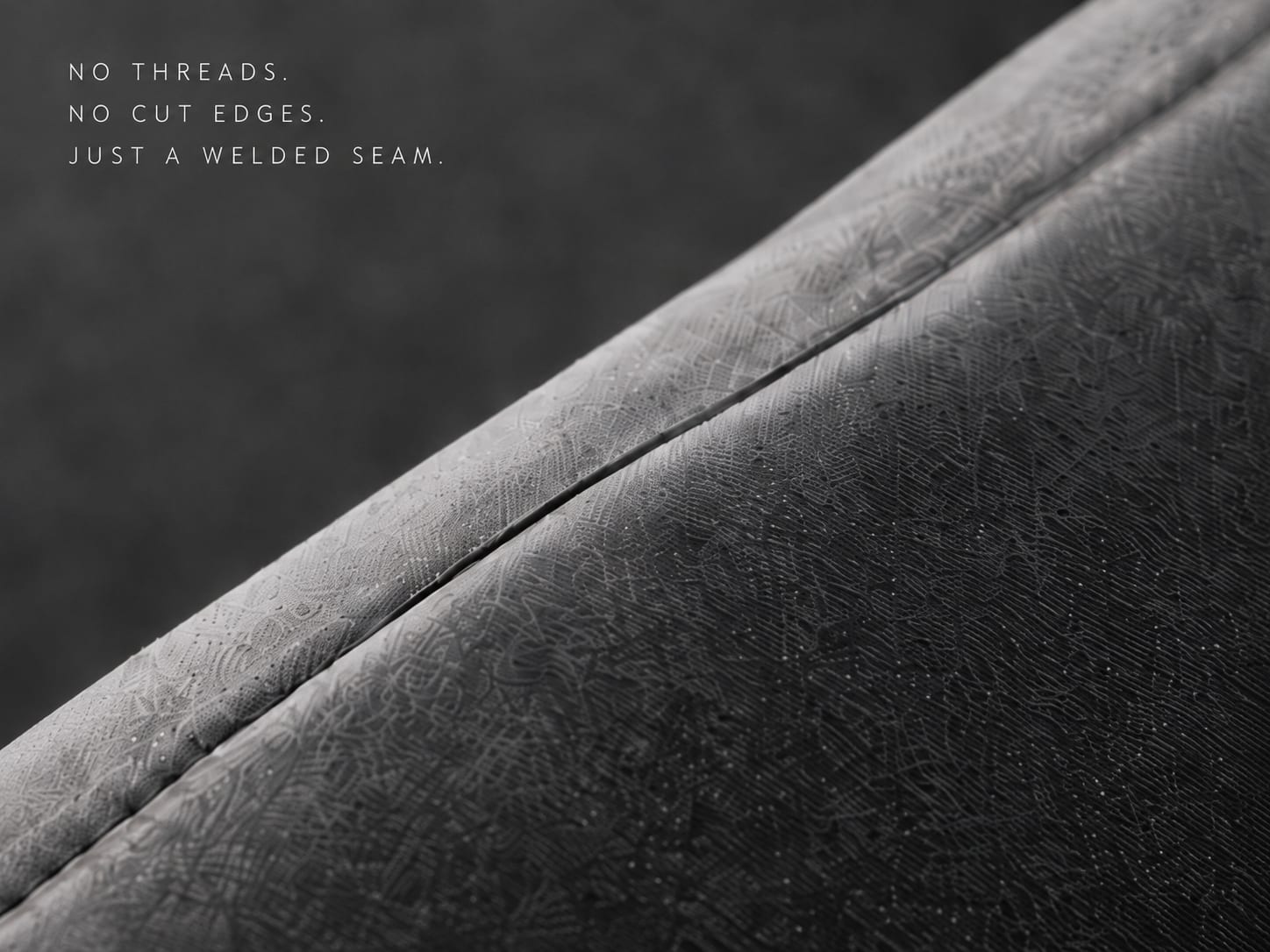
  • SeamsZero thread, zero cut edges. Every structural seam ultrasonically welded. Turn it inside out and it is as finished as the exterior.
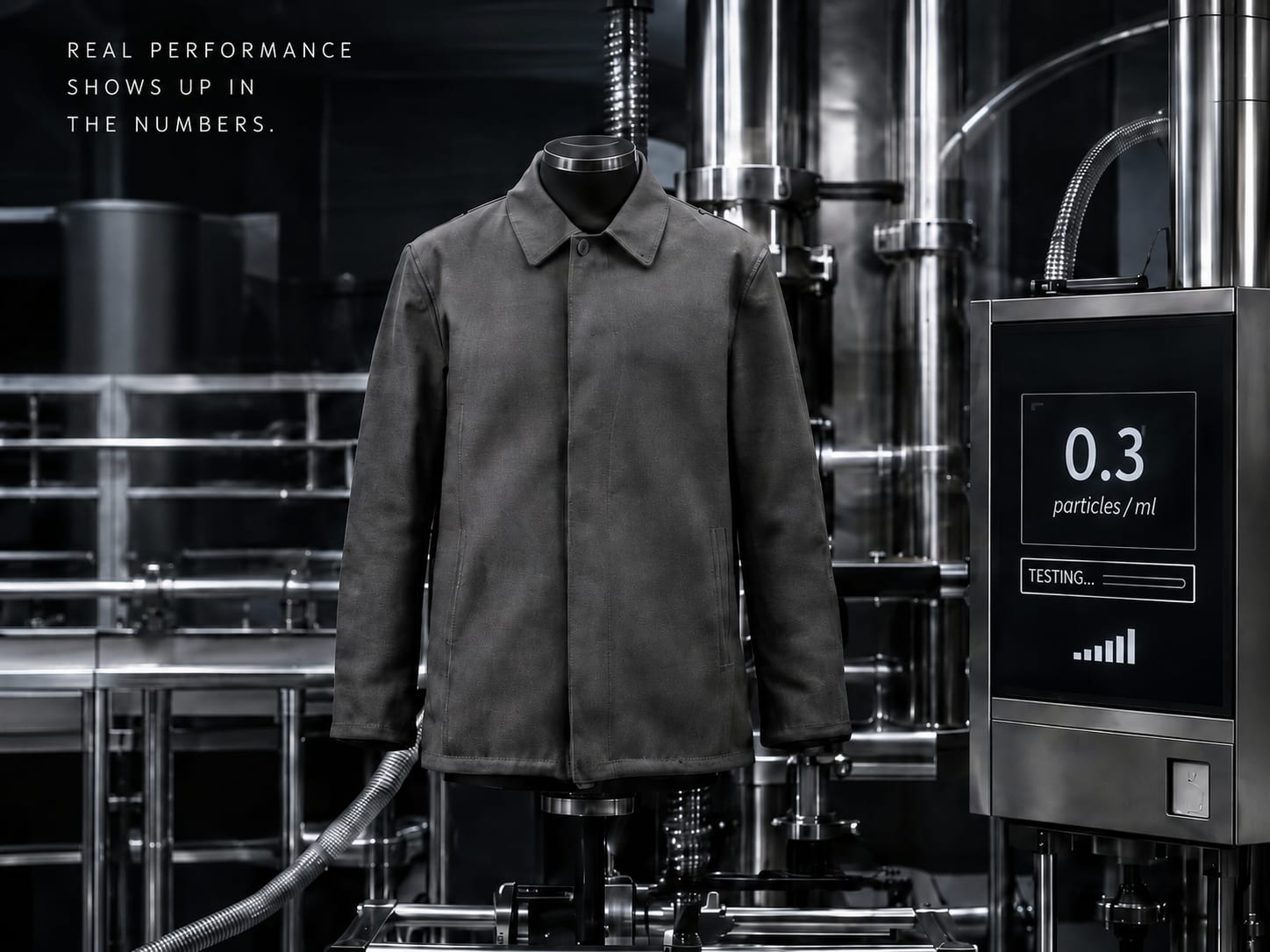
  • FabricContinuous monofilament face, densely woven and calendered flat. No fiber ends to escape, nothing for particles to lodge in. Verified near zero shed.
  • ColorAn engineered unnameable grey. Shown to ten witnesses it collects at least three different color names.
  • SilenceNo exposed zips, no glint, no click, no swish. Two pockets entered through welded slits. The front is one uninterrupted plane.
Macro of the shoulder seam: no threads, no cut edges, just a welded ridge of fused material
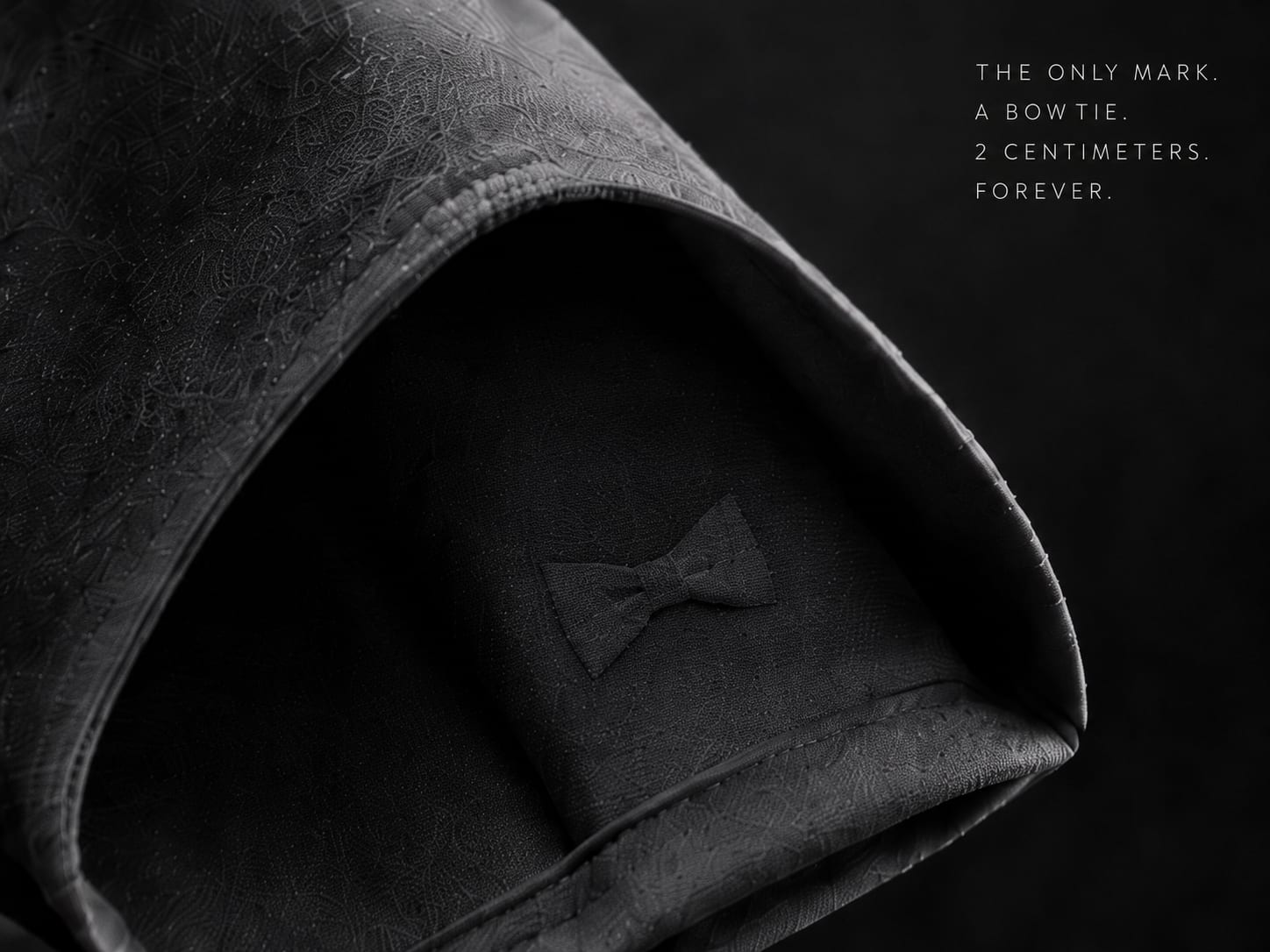
Inside the left cuff, a 2 centimeter tonal bowtie mark in welded relief, the garment's only decoration
The No Trace Jacket worn closed against a pale grey studio: one uninterrupted grey plane. Sheds nothing, says nothing
The jacket on a stand in a laboratory rig, particle counter reading 0.3 particles per milliliter
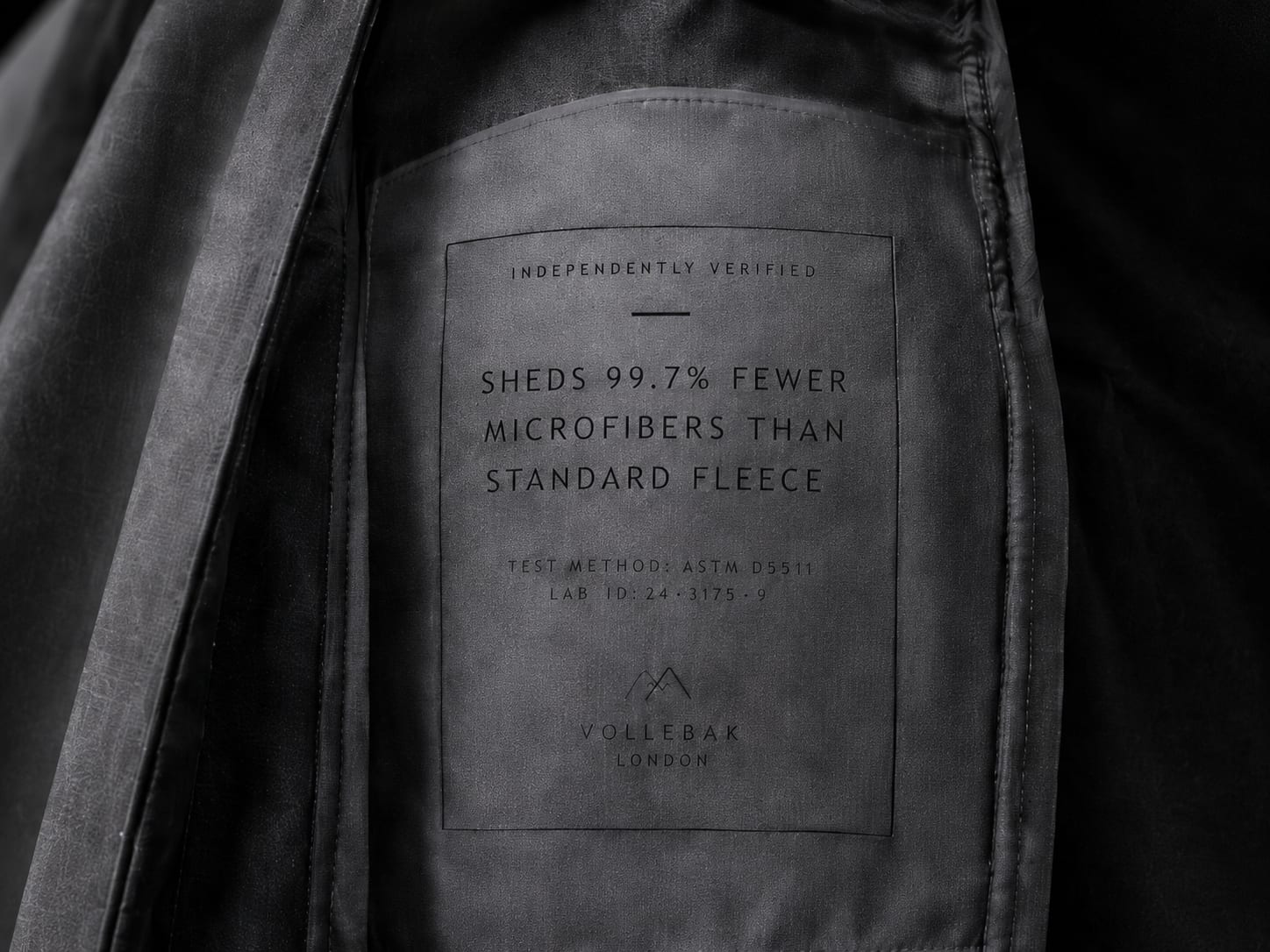
Interior spec plate: independently verified, sheds 99.7 percent fewer microfibers than standard fleece
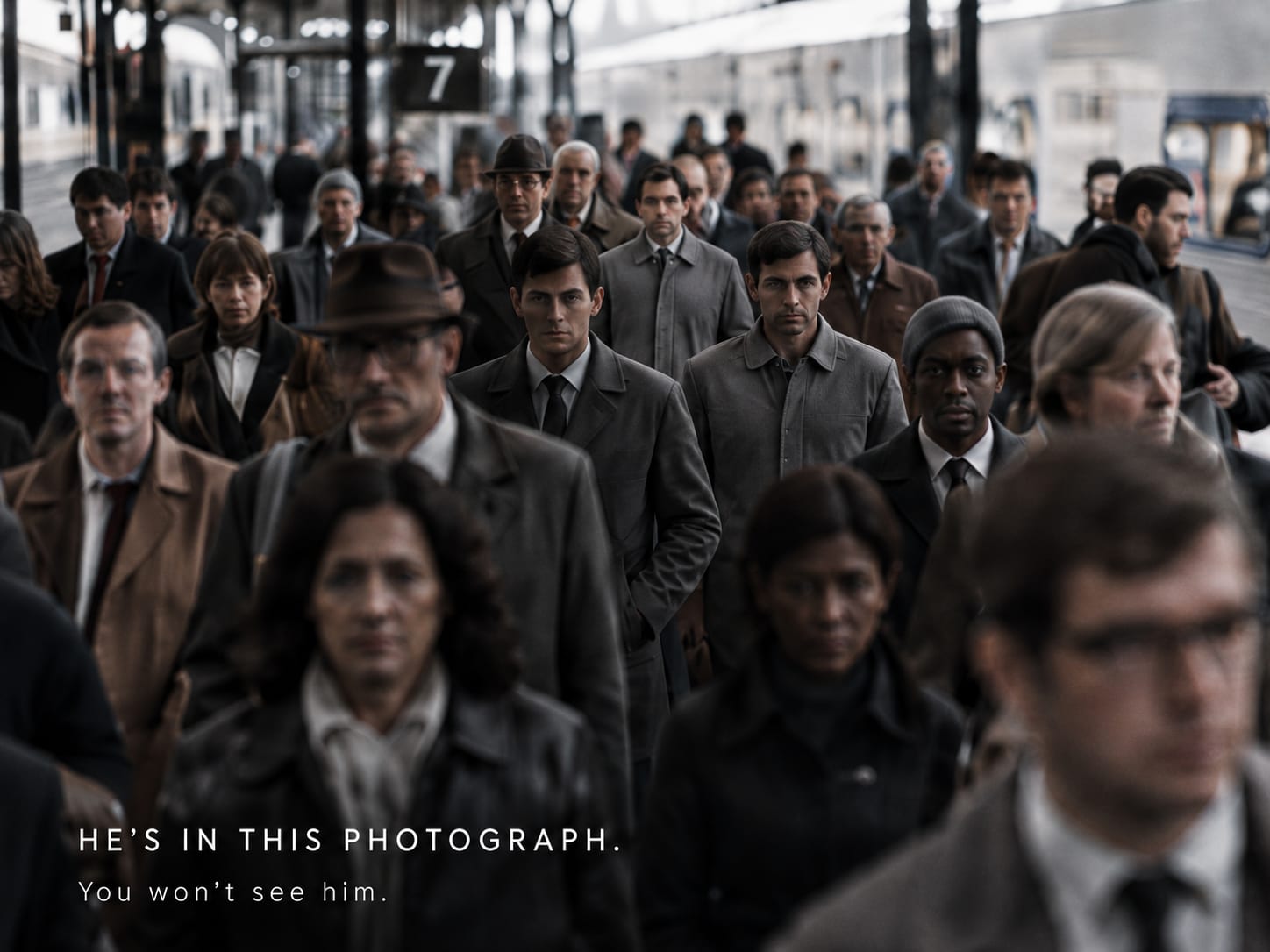
A crowded 1970s commuter platform in grey daylight. He's in this photograph. You won't see him
Teammate 04 Survived: four days in the Libyan Sahara, 1935 Role: Water procurement

Antoine de Saint‑Exupéry

Crashed his plane in the Sahara chasing the Paris to Saigon speed record, then walked out alive after four days of mirages. One of the things that kept him breathing: spreading fabric at night and wringing the dew out of it at dawn. About a liter, extracted from desert air with cloth and desperation. He turned those four days into The Little Prince. Everyone knows the author. Almost nobody knows the survivor.

Why he's on the team The rule of threes says water is the third day problem. He moved that wall with a parachute panel. On this team, he flies water procurement.
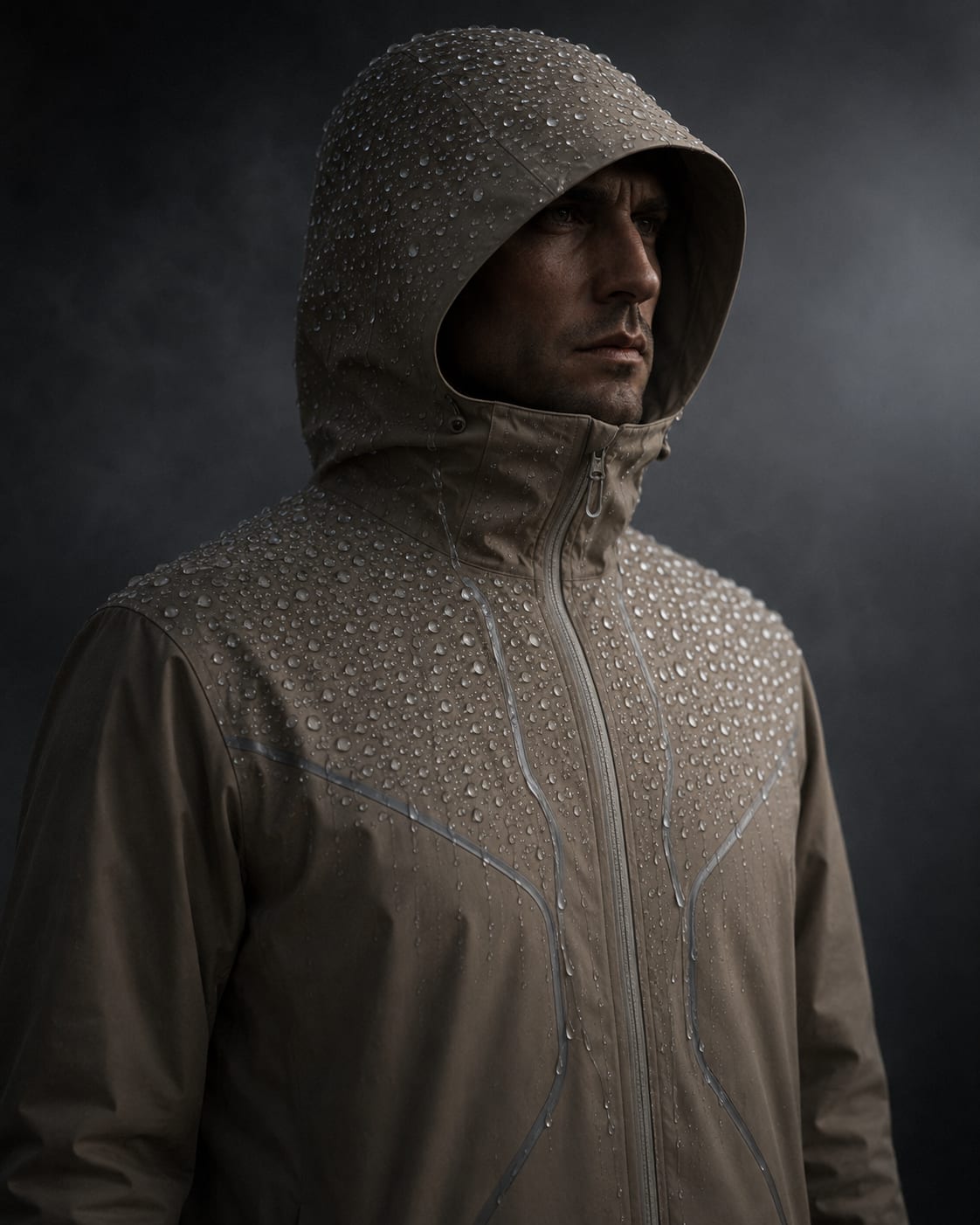
The Dew Jacket close up, hood up in dark studio fog, the collection field beaded with water and channels running
He builds

The Dew Jacket

The jacket that drinks the sky. His 1935 improvisation, engineered: the Namib desert beetle's shell, printed on a pilot's jacket.

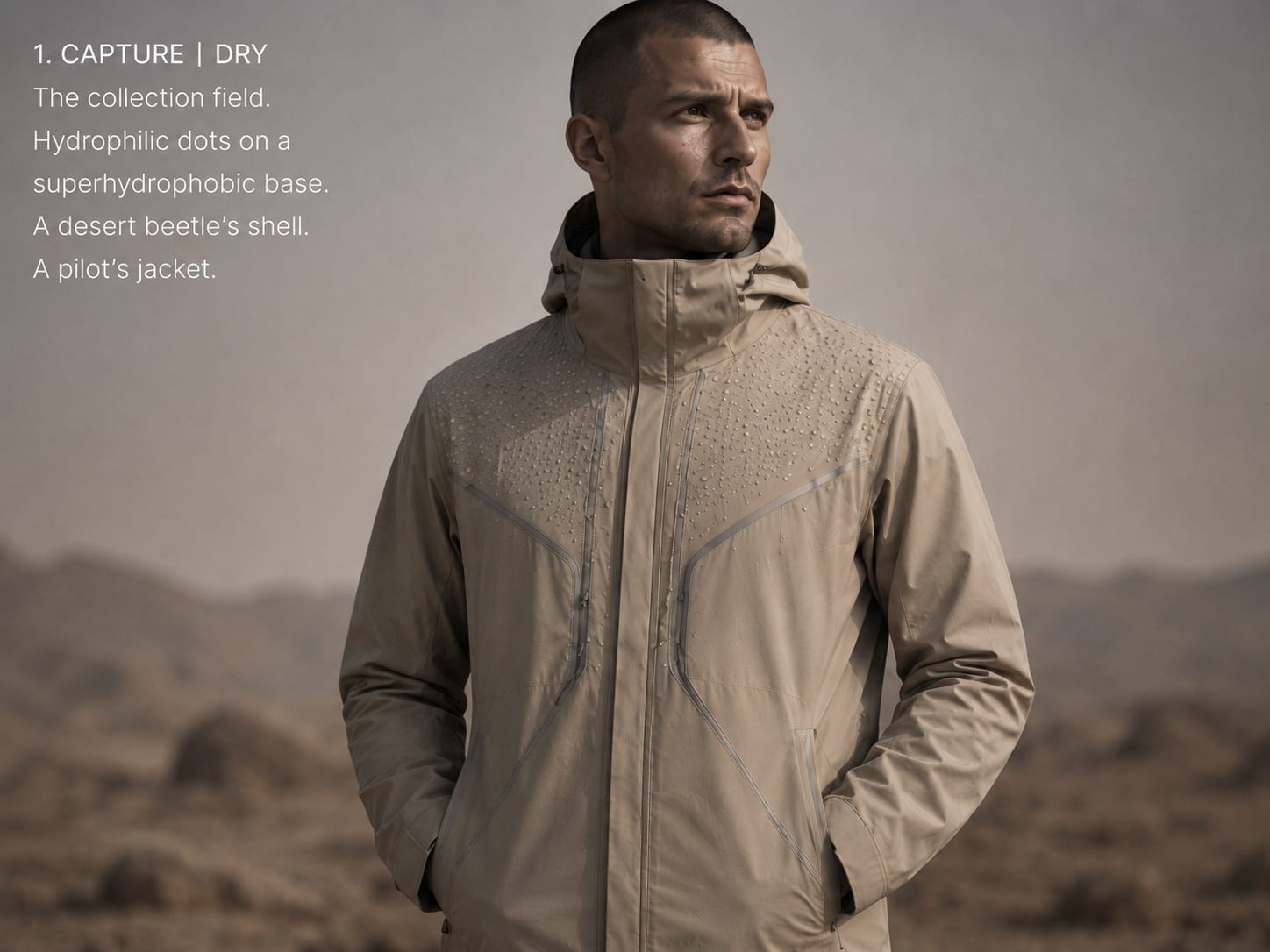
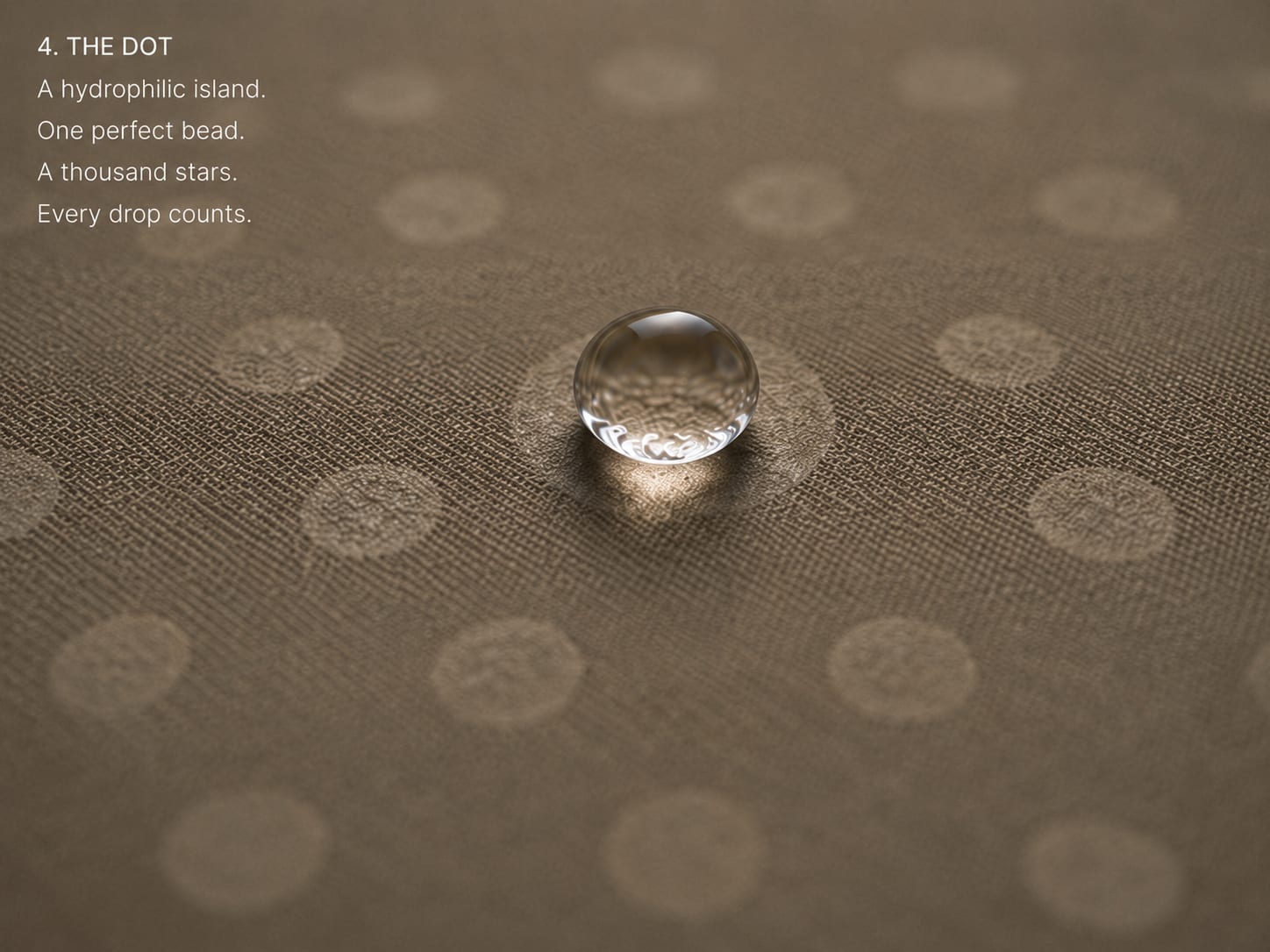
  • CaptureHood, shoulders and yoke patterned with hydrophilic islands on a superhydrophobic base. In fog, every dot grows a bead until it breaks free and rolls.
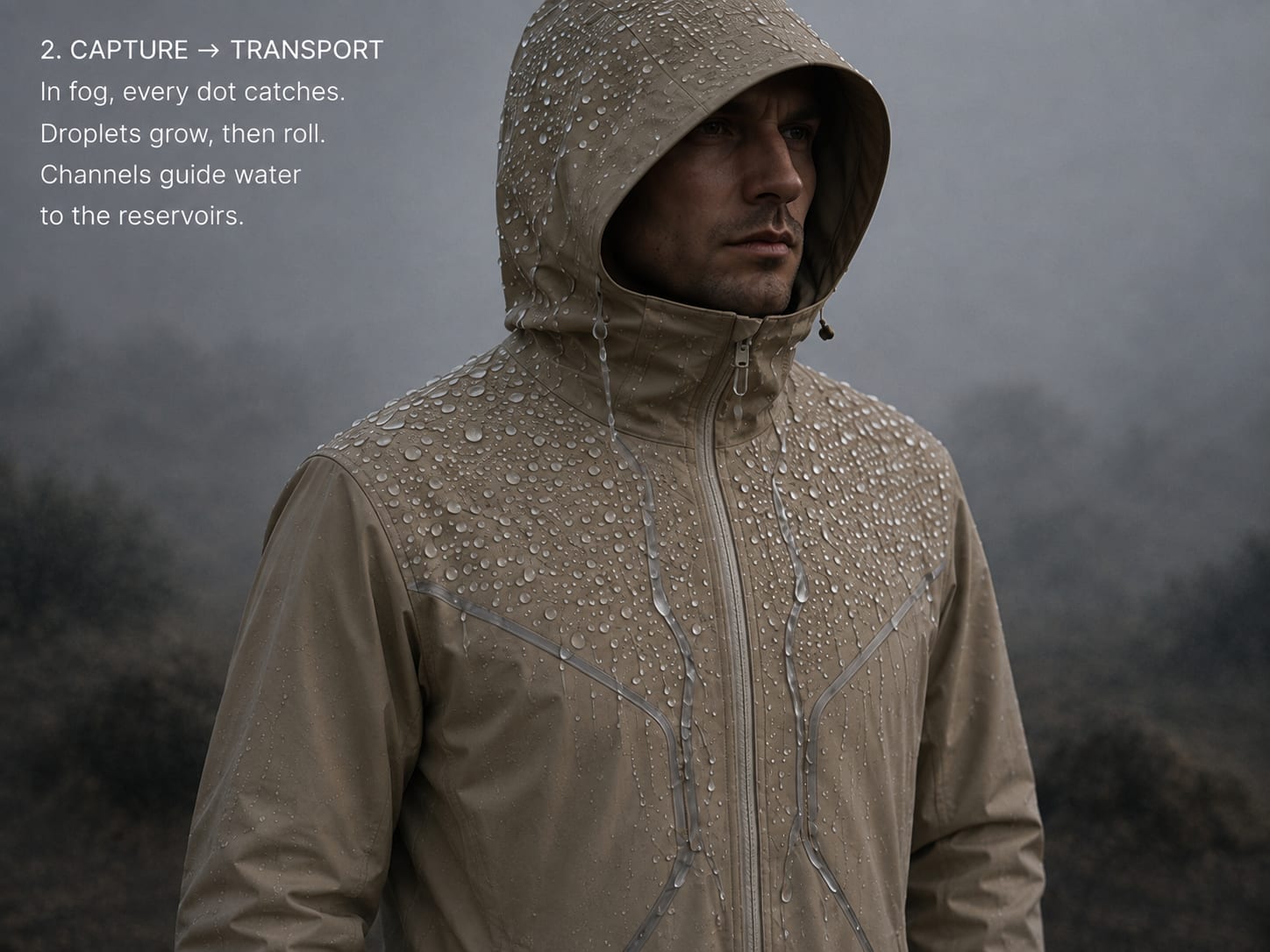
  • TransportWelded microchannels drain the yoke like a river delta in reverse, down into two 250 ml reservoirs. Gravity does all the work. No pump, no power.
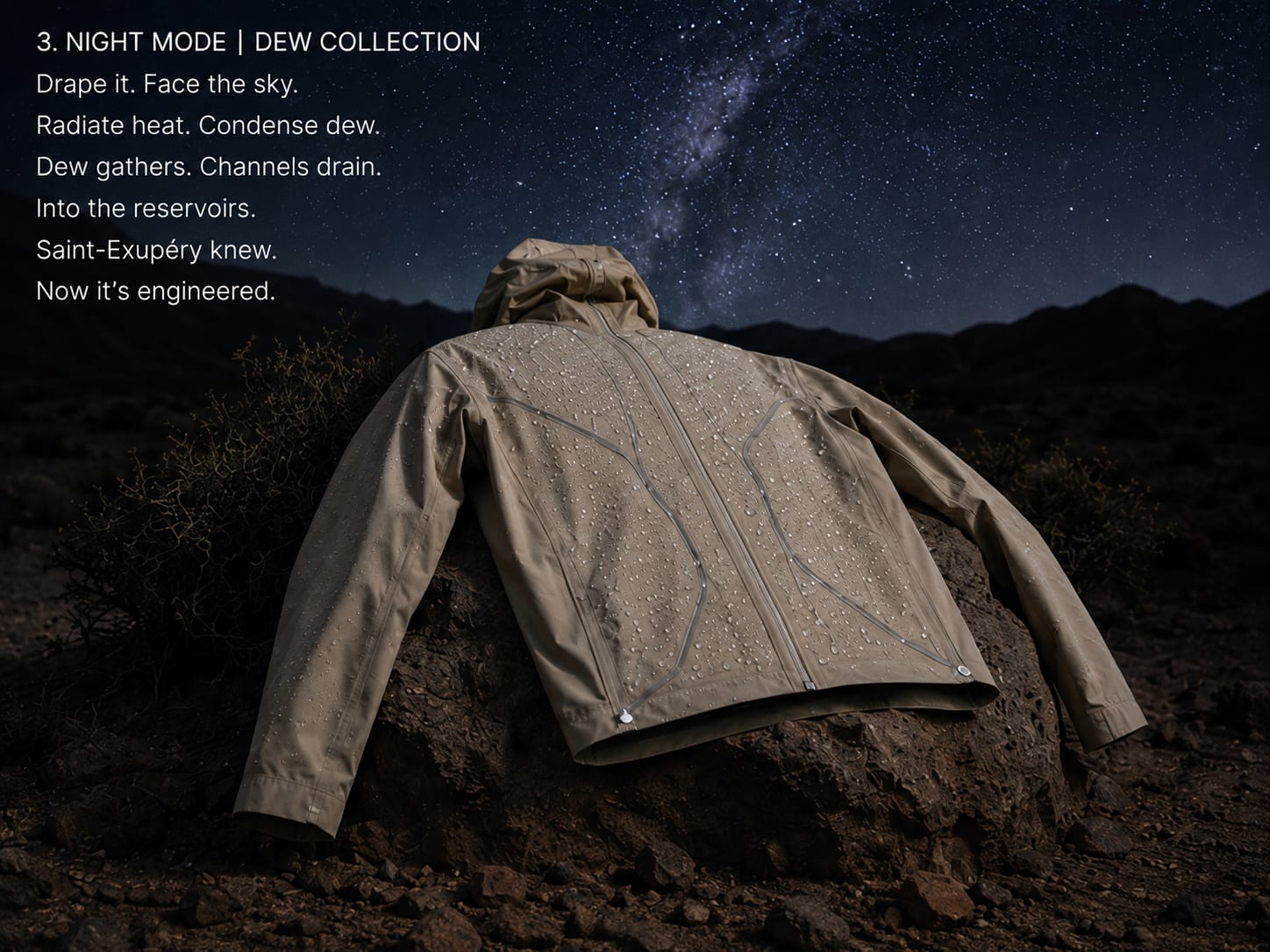
  • Night modeDon't wear it. Drape it, back panel to the open sky. The radiative finish drops below dew point and it condenses water unattended until dawn.
  • HonestyThe spec plate states the tested yield. A survival ration, not a canteen. Real numbers for unreal situations.
The collection field bone dry in the desert: hydrophilic dots on a superhydrophobic base, a desert beetle's shell on a pilot's jacket
In fog with the hood up: every dot catches, droplets grow and roll, channels guide water to the reservoirs
Night mode: the Dew Jacket draped over a rock under the Milky Way, back panel to the sky, beading with dew
Extreme macro: one perfect water bead organizing itself on a hydrophilic island in the matte weave
Teammate 05 Survived: West Africa, 1893 Role: Disease control

Mary Kingsley

A Victorian with no institution behind her who sailed alone to the deadliest coast on Earth, canoed mangrove swamps, climbed Mount Cameroon by a route no European had taken, and fell into a spiked game pit and walked away. Her explanation ran four words: a good thick skirt. She is the only pick in history whose stated survival thesis was the clothing itself.

Why she's on the team After every collapse in recorded history, the top killer isn't violence. It's disease. She is the disease officer, and she already proved the argument.
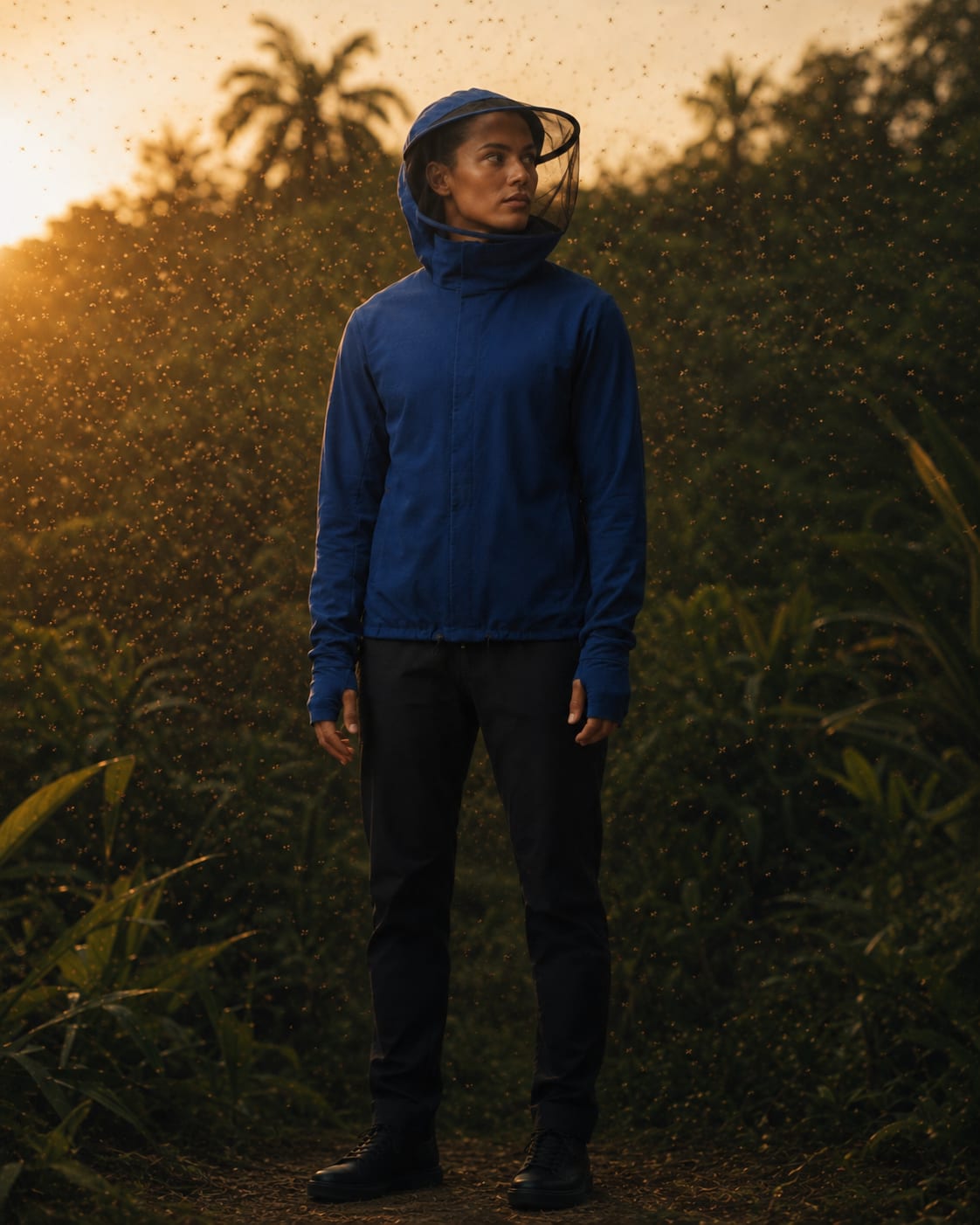
A woman stands calm at dusk in the full deployed Mosquito Jacket while a backlit swarm hangs in the air around her
She builds

The Mosquito Jacket

The deadliest animal on Earth kills several hundred thousand people a year, and it can bite through denim's thin cousins everywhere heat makes thick fabric unwearable. This is her good thick skirt, rebuilt for 32 degrees and 90 percent humidity.

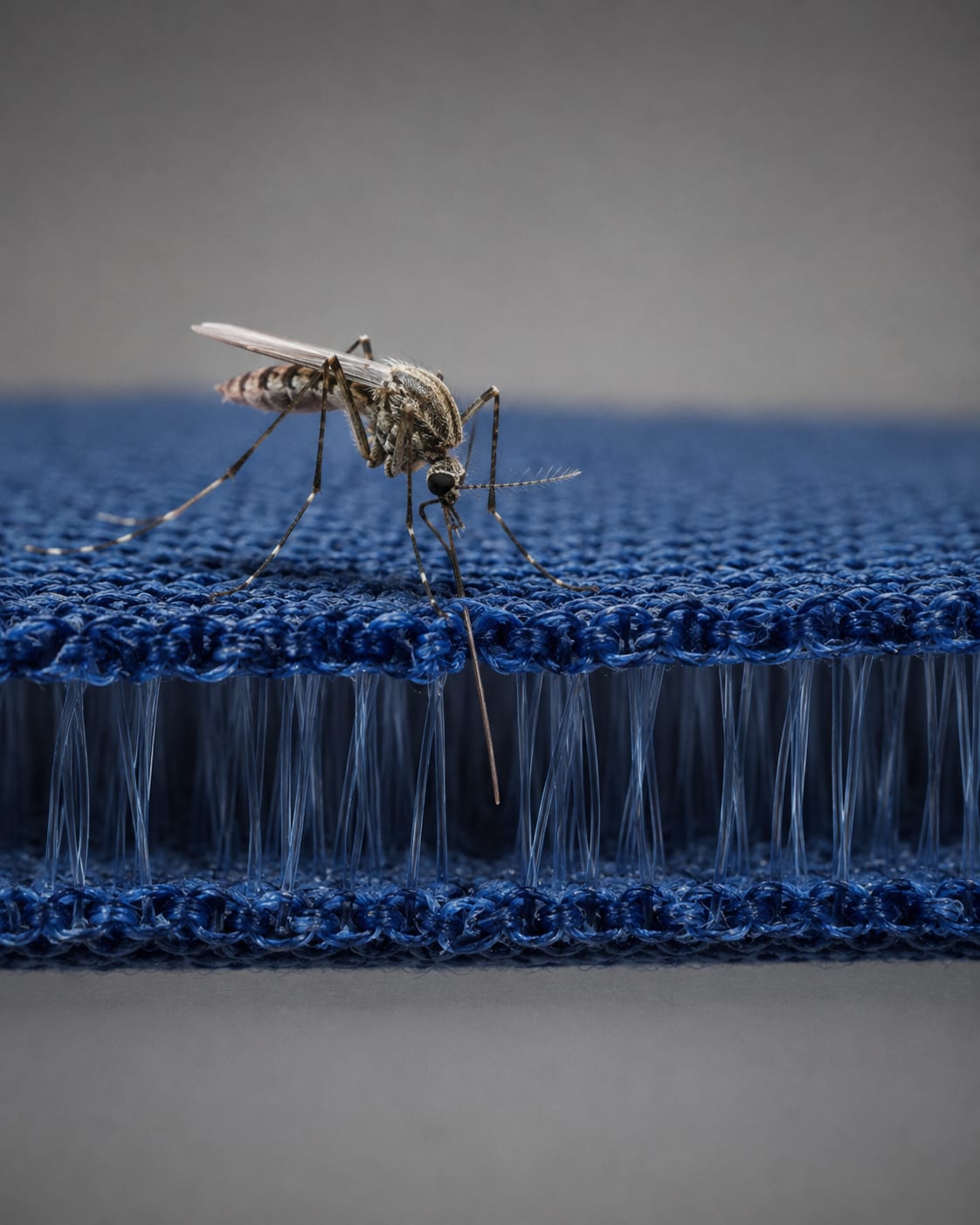
  • StandoffA three layer spacer knit that is mostly air. The proboscis needs to travel 2 mm to reach skin. It penetrates the outer face, and dangles short. It lands, it drills, it hits nothing.
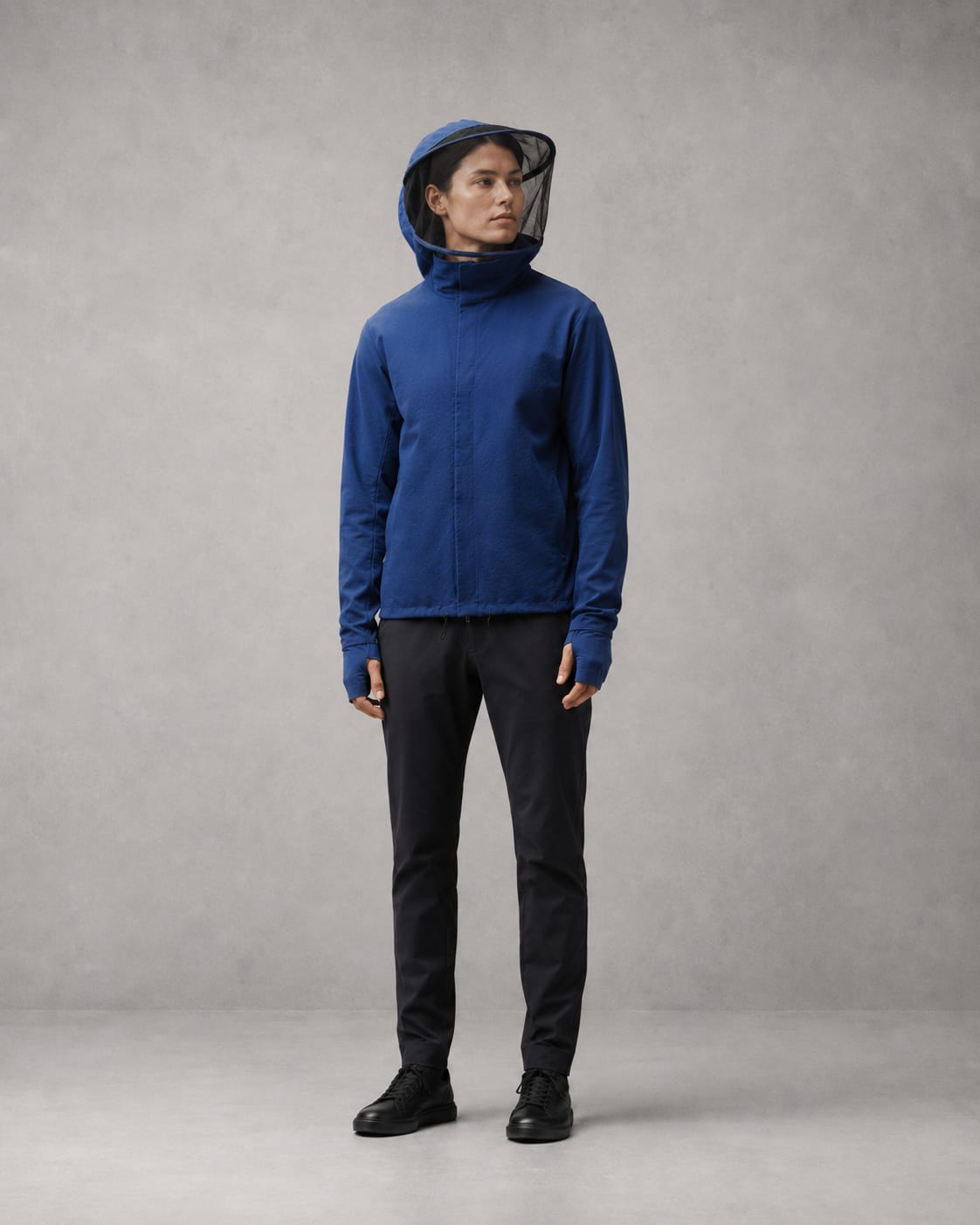
  • DeployablesThe collar rolls up into a black mesh head net on a wire brim. The cuffs roll out into gaiters with thumb loops. The hem drops and cinches, killing the scent plume rising off your body.
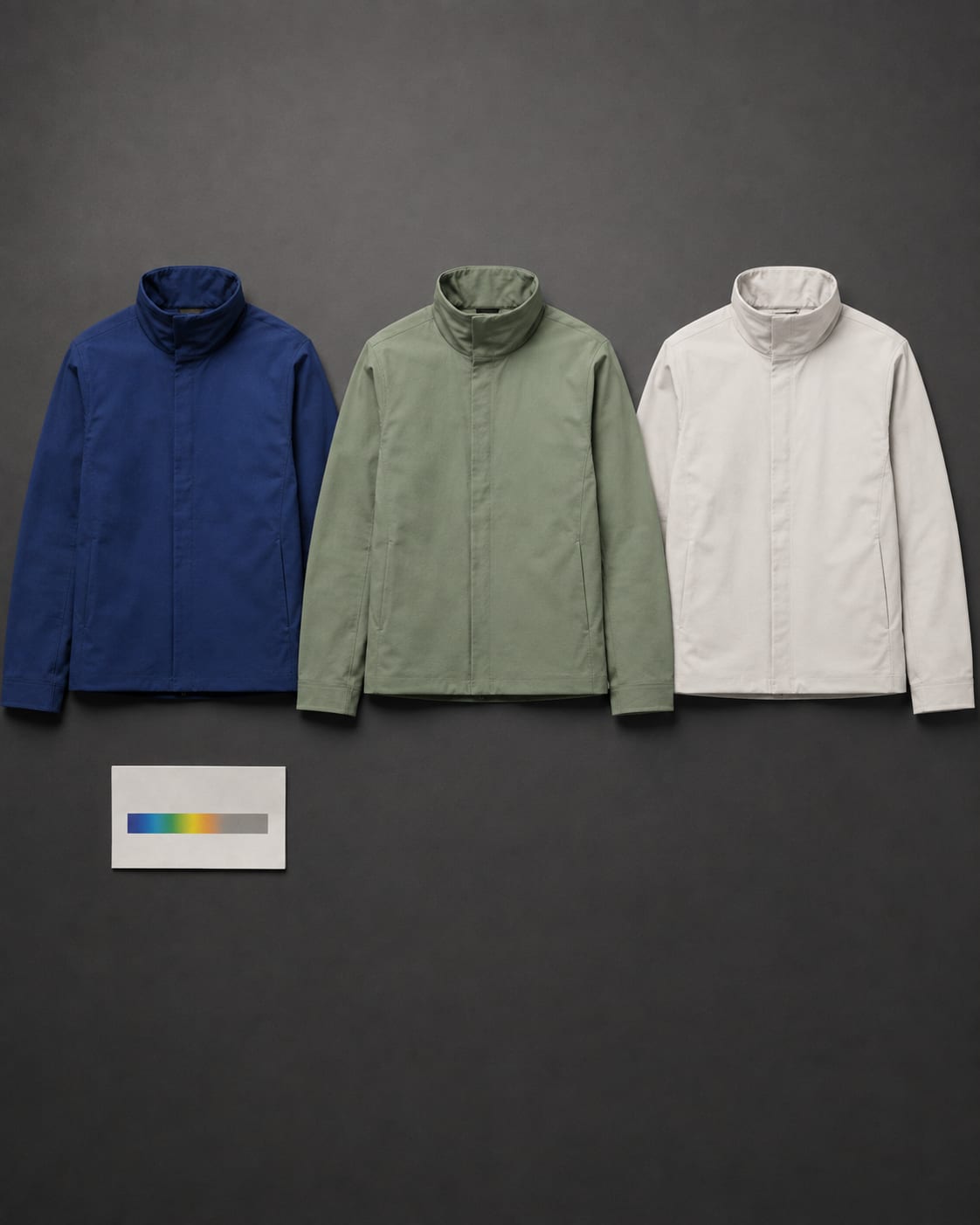
  • ColorMosquitoes hunt red, orange and black wavelengths and largely ignore blue, green and bone. The colorways are restricted accordingly. Color as a medical spec, citation on the hangtag.
  • ChemistryNone. No permethrin, nothing to wash out, nothing to reapply. Geometry doesn't expire.
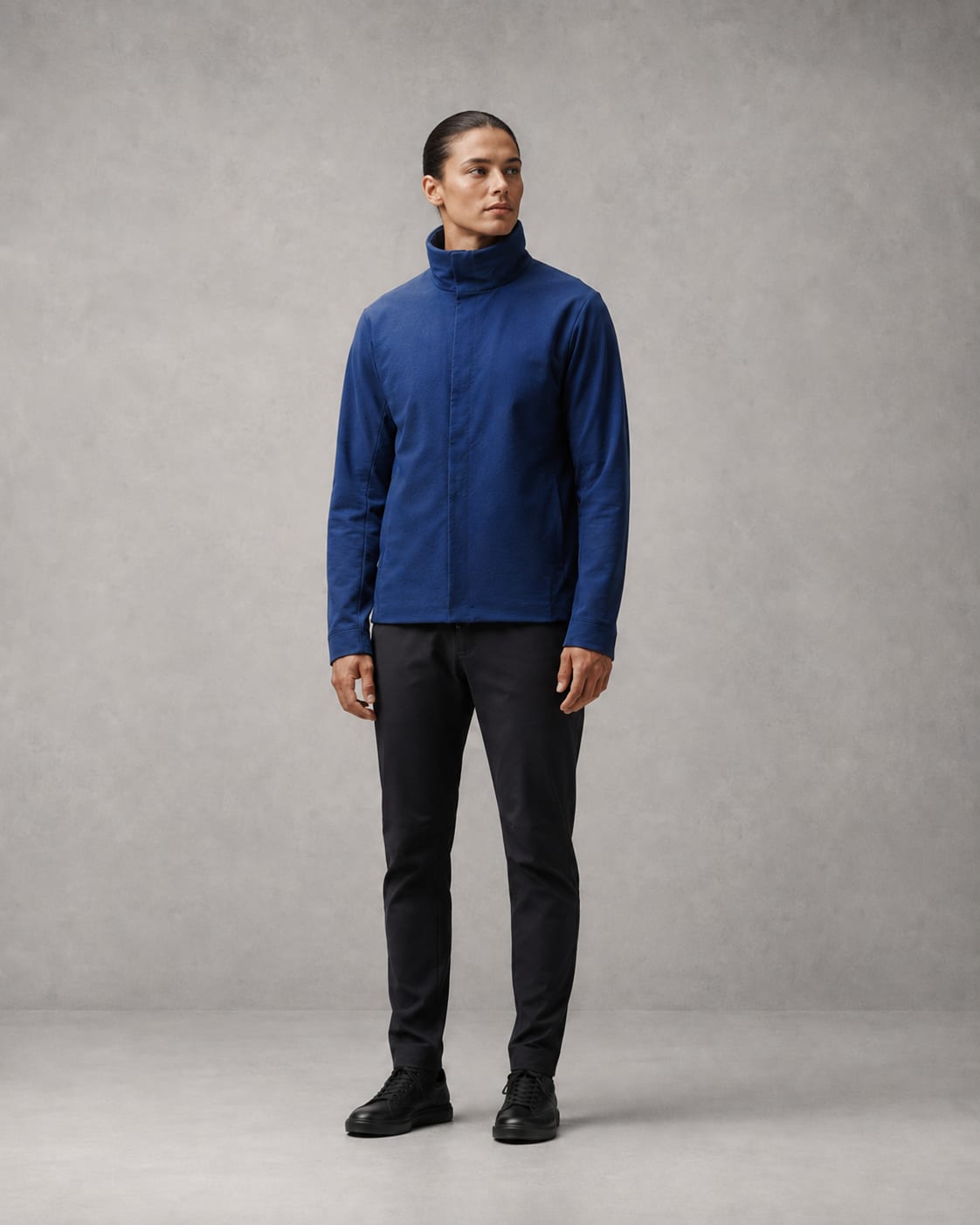
StowedThe Mosquito Jacket stowed: a normal looking cobalt jacket with a substantial stand collar
99.9% of the time: just a commuter jacket.
DeployedThe Mosquito Jacket deployed: head net up over a wire brim, gaiters out, hem sealed
Twenty minutes at dusk: the only smart looking person outside.
Macro of a mosquito on the spacer knit, its proboscis reaching into the gap and hanging short of the far side
The mechanism. It lands. It drills. It hits air.

Three colorways, all of them medical decisions. The cobalt is called Secunderabad, for the laboratory where Ronald Ross went half blind at the eyepiece proving the mosquito was the killer. His date, Mosquito Day, August 20, 1897, is printed on the spec plate. The discovery lives in the details. The seat goes to the survivor.

Three colorways flat: cobalt, spectral green and bone white, with a spectrum card
The palette is the spec. Only wavelengths mosquitoes ignore.

The capsule, assembled.

01ÖtziQuartermasterThe Ötzi Jacket. Heals like skin.
02Desmond DossMedicThe Trauma Jacket. A paramedic you wear.
03D.B. CooperOperational securityThe No Trace Jacket. Sheds nothing, says nothing.
04Antoine de Saint‑ExupéryWater procurementThe Dew Jacket. Drinks the sky.
05Mary KingsleyDisease controlThe Mosquito Jacket. A good thick skirt, at 32°C.

Warm. Healed. Watered. Unbitten. Unfound. That covers the five of them.

Five survivors, five garments, and one team captain in a t-shirt. Nobody argues with a toxic unicorn in a t-shirt and wins. That's why I need the FWAHBL Jacket.

Size L, please. While there's still mail service.